



Every era produces a new definition of what makes a brand strong. In the mid-2000s, it was consistency. In the early Instagram era, it was aesthetics. In the late 2010s, it was purpose. But in 2026, brand strength is defined by something far more complex: the ability to remain relevant, trusted and emotionally resonant in a world shaped by volatility, technological acceleration and cultural fragmentation. Brands today must be future-proof not because the future is predictable, but because it is not.
Future-proofing is no longer about safeguarding against risk. It is about cultivating adaptability, emotional intelligence, technological fluency and human-centred resilience. The brands that will thrive in the next decade are those that build themselves not as monuments, but as living systems.
The World Has Outgrown Linear Branding
The traditional brand strategy model — a static identity, a fixed positioning, a rigid set of values — no longer aligns with the pace of cultural and technological change. Consumers have become more discerning, more sceptical and more aware of their own psychological needs. Markets shift every quarter. AI introduces new possibilities daily. Social platforms rise and fall in unpredictable cycles.
What this means is that a brand can no longer rely on a fixed identity. It must operate with fluidity and intelligence. It must evolve continuously without losing its centre. It must be capable of holding complexity rather than resisting it.
This shift is reflected in Deloitte’s 2025 Global Marketing Trends report, which highlights the need for “responsive identity frameworks” rather than static brand structures:
https://www2.deloitte.com/global/en/pages/consulting.
Brands must operate more like ecosystems than logos.
Humanity Is the New Competitive Advantage
AI is everywhere. It writes emails, analyses data, drafts strategies, generates content, assists with design, predicts behaviour and optimises performance. But the rise of AI has illuminated something surprising: the most valuable brands are the ones that feel unmistakably human.
Humanity is the one advantage technology cannot replicate. Consumers want emotional resonance, not algorithmic perfection. They want clarity in a world of noise and sincerity in a world of manufactured narratives. They want brands that communicate with warmth, nuance and transparency.
This is why founder-led storytelling, human-centric language, emotionally intelligent customer service and vulnerable communication have become some of the strongest tools in modern brand-building. The success of brands like Mid-Day Squares (https://www.middaysquares.com) and Glossier (https://www.glossier.com) underscores a simple truth: in an era of synthetic content, authenticity becomes a form of luxury.
Future-proof brands lead with humanity, even as they embrace automation.
Trust Has Become the Core Brand Asset
Trust has always mattered, but in 2026 it has become the foundational currency. With misinformation spreading across the internet, AI-generated content blurring lines of truth, and consumers wary of being manipulated by algorithms, trust is now non-negotiable.
A brand that signals honesty, ethical clarity and transparent decision-making gains disproportionate loyalty. This is why radical transparency — about sourcing, pricing, technology usage, data privacy and product performance — has become a strategic advantage rather than a risk.
The Edelman Trust Barometer makes this clear: consumers reward brands that behave predictably, communicate honestly and act ethically, especially in moments of uncertainty:
https://www.edelman.com/trust.
Trust is no longer part of the strategy. It is the strategy.
Brands Must Now Think in Multiple Timelines
To become future-proof, a brand must operate in three timelines simultaneously: the present, the near future and the long future. What matters today may not matter in six months. What matters in six months may evolve again in three years.
This is why brands that thrive in 2026 have built strategic fluidity into their DNA. They plan with elasticity. They update their frameworks regularly. They refine their messaging rather than cement it. They test new formats, adopt new customer patterns and adjust their aesthetic without losing their soul.
Companies like Apple, Nike and Patagonia succeed because they are not frozen. They evolve in a way that feels both innovative and inevitable. They retain their essence while expanding their expression.
The future belongs to brands that can shift shape without losing meaning.
Emotional Relevance Is More Important Than Category Dominance
Category disruption used to be the measure of success. Today, emotional relevance is the real battleground. Brands do not need to dominate their category to dominate culture. They need to create meaning, resonance and identity.
This is why smaller brands — in beauty, wellness, fashion, technology and home — are outperforming legacy corporations in cultural relevance. They speak directly, emotionally and personally. They make the consumer feel seen.
Future-proof brands treat emotional intelligence not as a marketing tactic, but as a strategic foundation. They understand the inner life of the consumer: their fears, aspirations, self-perception and emotional landscape.
Emotion, not budget, determines cultural longevity.
AI as Co-Creator, Not Replacement
Brands that thrive in the AI era view AI not as a threat, but as a creative partner. They use AI to accelerate innovation, not to replicate human intuition. They use it to generate ideas, explore possibilities, personalise experiences and predict behaviour — while human teams provide judgement, imagination and ethical reasoning.
Tools such as Midjourney (https://www.midjourney.com), ChatGPT (https://openai.com), ElevenLabs (https://elevenlabs.io) and Adobe Firefly (https://www.adobe.com/sensei/generative-ai) have made it possible for brands to iterate faster than ever. But speed is only valuable when guided by discernment.
The brands that treat AI as a collaborator achieve a strategic advantage. The brands that treat AI as a shortcut lose the human resonance consumers crave.
Community Is the New Brand Infrastructure
In the 2026 landscape, a brand’s greatest asset is not reach — it is community. Reach generates visibility. Community generates loyalty, advocacy and long-term revenue.
Strong communities form around brands that are transparent, emotionally intelligent and creatively distinct. They form when consumers feel a sense of belonging, shared identity and participation in the brand’s evolution.
This is why digital communities on Discord, Geneva, Substack, TikTok niches and private membership spaces have become integral to brand-building. They are not add-ons. They are infrastructure.
Community is the modern moat — difficult to copy, deeply rooted and culturally powerful.
Purpose Must Be Real, Not Performed
The purpose boom of the 2010s created an unfortunate side effect: brands began declaring purpose without living it. Consumers in 2026 can detect this instantly. They want brand values that are genuine, consistent and visible in action — not in slogans.
Future-proof brands are those whose purpose is coherent with their design, pricing, team culture, supply chain, customer experience and communication. Purpose is not what a brand claims. It is what a brand does repeatedly.
Patagonia, Aesop and Allbirds have built their longevity on this principle. Their purpose is not part of the marketing plan. It is the structure of the company.
Purpose without proof is theatre. Purpose with proof is power.
Final Thought
To build a brand that survives the next decade, companies must blend the technological with the human, the strategic with the emotional, the fast with the thoughtful. They must adopt intelligence without losing integrity. They must evolve continuously while holding onto their core truth.
A future-proof brand is not the biggest or the loudest.
It is the one that remains meaningful, trusted, adaptive and unmistakably human as the world around it transforms.
Brands that understand this will not simply endure the future.
They will define it.

TSF Reporters
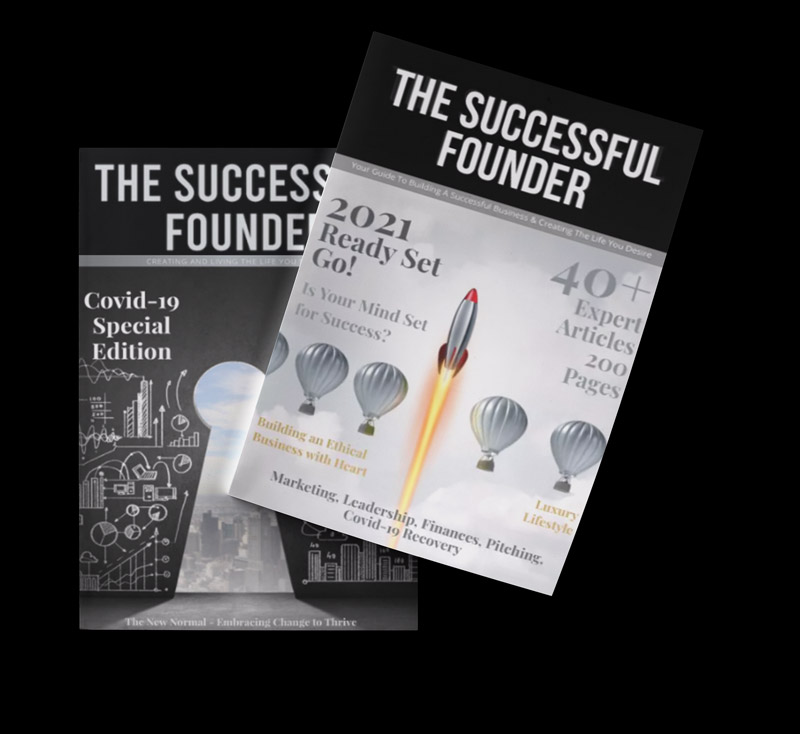
The Successful Founder Magazine is the go to feature-rich magazine for founders on all stages of their entrepreneurship journey .