



There’s something distinctive about the transition into 2026. The global economy isn’t simply cooling or warming; it is shifting shape. For founders, the new year doesn’t feel like a straight continuation of 2025—it feels like a reset. Interest rates are stabilising, new markets are opening, consumer expectations are evolving at blistering speed, and artificial intelligence has become less of an experiment and more of an operating system for everyday business life.
For entrepreneurs, this moment presents an opportunity: recalibrate early, or risk becoming irrelevant before Easter.
The Reset Everyone Should Have Seen Coming
The signals were there throughout 2025. Startups scaled too quickly and found themselves overexposed. Mature companies failed to innovate and lost ground to small, agile rivals. Consumer savings continued to fluctuate with high living costs. And yet, amidst all of it, the appetite for entrepreneurship grew stronger.
The business reset of 2026 isn’t just economic—it’s behavioural.
Consumers are demanding clarity and usefulness.
Employees are craving stability and meaningful work.
Investors are shifting their lens from hyper-growth to sustainable value.
McKinsey has been documenting the shift towards “durable, resilient growth models” rather than runaway expansion at all costs: https://www.mckinsey.com/capabilities/growth-marketing-and-sales/our-insights.
It’s also echoed across PwC’s Global CEO Survey: https://www.pwc.com/gx/en/issues/ceo-agenda/ceosurvey.html.
Put simply: the companies that thrive in the new year will be the ones that build intelligently, rather than rapidly.
1. Reassess Your Value Proposition with Brutal Honesty
What most founders forget—usually when they’re knee-deep in growth strategies—is that customers rarely buy a “brand story.” They buy outcomes. In a landscape where every industry is saturated with hundreds of similar offers, clarity becomes currency.
Ask yourself:
What problem are we solving right now—not last year?
Is our solution still the fastest, simplest, or most delightful way to solve it?
If we vanished today, would our customers genuinely miss us?
Harvard Business Review’s value-innovation frameworks remain among the most helpful tools for this:
https://hbr.org/2015/06/value-innovation.
For 2026, founders must trim what’s unnecessary, refine what’s essential, and articulate it so clearly that even a distracted, multitasking consumer can absorb it in seconds.
2. Build an AI-Integrated Business, Not an AI-Adjacent One
A major misconception through 2023–2025 was that “using AI tools” equalled “running an AI-enabled company.” These are radically different concepts.
A business integrated with AI looks like this:
Processes operate automatically whenever possible.
Customer insights update in real time, not quarterly.
AI handles repetitive work, freeing humans for creative and strategic tasks.
Content delivery, customer service, and logistics flow with minimal friction.
A business merely adjacent to AI, meanwhile, tends to be one that simply uses ChatGPT to generate copy.
The difference will define who thrives in 2026 and who quietly dissolves.
For inspiration, look at companies truly embracing system-level automation—like UiPath (https://www.uipath.com/) or Zapier’s multi-layered AI workflows (https://zapier.com/ai).
The opportunity is not in one-off usage but in redesigning the way the company functions.
3. Master Agile Forecasting (Static Plans Are Dead)
The volatility of the last four years has made long-term forecasting nearly impossible. But the companies performing best in unstable conditions share one characteristic: they plan constantly.
Agile forecasting is becoming the default model for modern businesses. It is flexible, data-driven, and allows for course correction every quarter—or every month—if required.
Founders should consider implementing:
Rolling 12-month forecasts rather than static annual plans.
Quarterly strategy sprints.
Live dashboards integrating financial, marketing, and operational data.
Good tools to support this shift include:
– Notion for modular planning: https://www.notion.so
– Monday.com for operational forecasting: https://monday.com
– Klipfolio for real-time dashboards: https://www.klipfolio.com
With uncertainty comes opportunity—if visibility is high.
4. Go Deep, Not Wide: Precision Targeting Is In
The “spray and pray” era of marketing is firmly behind us. Budget-conscious, data-literate founders are discovering that a smaller, more specific audience can outperform a broad market by a landslide. Niche industries are exploding, and hyper-personalisation is quickly transitioning from luxury to expectation.
Brands that excel in 2026 will be the ones who:
Know precisely who they serve.
Can describe their ideal customer in three sentences, not three paragraphs.
Deliver content, products, and experiences tailored to individual behaviour.
HubSpot’s latest marketing trends report is a worthwhile read:
https://www.hubspot.com/state-of-marketing.
The winter reset is the perfect time to refine—or even redefine—who you are actually trying to reach.
5. Reduce Operational Bloat Early
In every economic transition, founders tend to cut too late. The smarter move is to reassess early in Q1. “Operational bloat” doesn’t just mean staffing levels; it includes:
– Too many platforms
– Projects that no longer align with strategic goals
– Overly complicated customer journeys
– Products with low margins but high workload
A leaner business is not a weaker business. It’s a more durable one.
A helpful resource is the Lean Enterprise Institute’s guides:
https://www.lean.org/Tools-and-Resources/Thought-Leadership.
6. Prioritise Reputation and Trust (They Convert Better Than Ads Now)
In a world where AI has made content production effortless, trust has become the new competitive edge. Customers and clients are turning to brands with strong reputations, transparent communication, and visible leadership.
This includes:
– Founder visibility on platforms like LinkedIn (https://www.linkedin.com)
– Regular, authentic communication
– Third-party endorsements and press coverage
– Clear ethical or sustainability principles
You don’t need to become a loud personal brand—but you do need to be a visible human one.
7. Prepare for New Funding Conditions
Investors are becoming far more selective. The good news: they are still investing—just in more thoughtful, resilient ideas.
Top areas receiving attention in 2026 include:
– Climate tech
– AI infrastructure
– Wellness and longevity
– Robotics
– Financial inclusion
– Creator-driven commerce
Crunchbase’s funding tracker is helpful for sector insights:
https://www.crunchbase.com/lists/this-weeks-funding.
If you’re seeking investment, focus on:
unit economics, sustainable margins, strong leadership, and a clear, data-driven plan.
The Bottom Line
2026 isn’t a year for frantic growth or reckless expansion. It’s a year for intelligent reinvention. The businesses that emerge strongest will be those that use this winter reset to clarify their value, modernise their systems, nurture trust, and design their operations with resilience at the centre.
The reset is already here. The founders who treat it as an opportunity—rather than a disruption—will be the ones shaping the next decade of entrepreneurship.

TSF Reporters
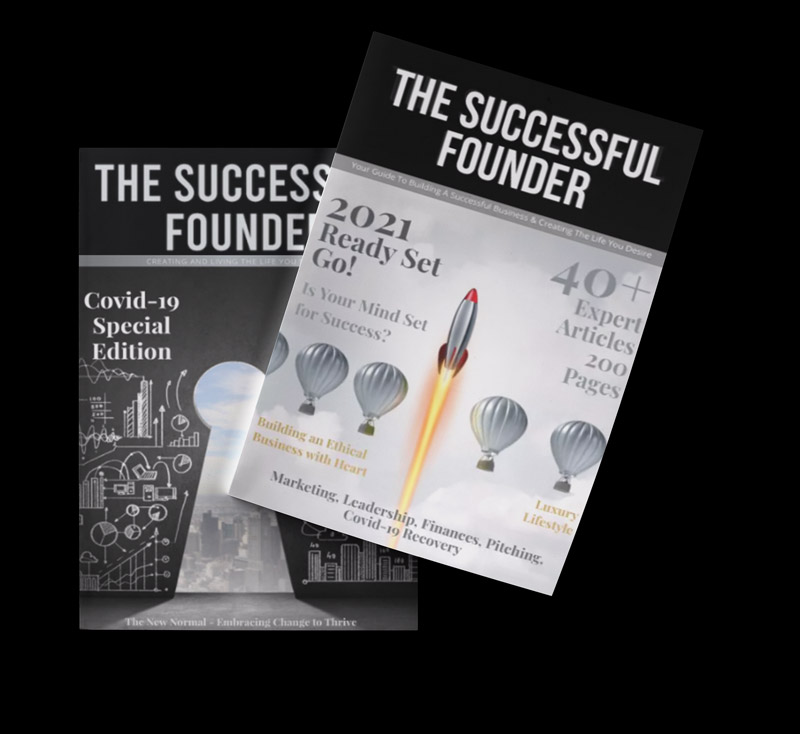
The Successful Founder Magazine is the go to feature-rich magazine for founders on all stages of their entrepreneurship journey .