



There has always been an economy behind influence, but in 2026 that economy has become more complex, more lucrative and more invisible than ever. While much public attention remains fixed on front-facing creators — the ones making videos, hosting podcasts and building huge social followings — a quieter ecosystem has emerged beneath the surface. It is made up of digital power brokers, algorithm strategists, private community owners, micro-media founders, niche operators and distribution specialists who rarely appear on camera yet shape the entire architecture of online behaviour.
This is the hidden economy of influence. It is not defined by celebrity or follower count, but by access, intelligence, network effects and the ability to guide attention in precise, commercially impactful ways. And for founders, creators, marketers and investors, understanding this shadow layer of the digital landscape has become a strategic necessity.
Influence Has Become Decentralised — And Far More Sophisticated
A decade ago, influence relied on visibility. The creators with the biggest audiences controlled the conversation. Today, visibility is only a small part of the equation. Algorithms have become more intelligent, niches have deepened, and digital culture has fractured into thousands of micro-communities across TikTok, Instagram, YouTube, LinkedIn, Discord, Reddit, X and private membership platforms.
This fragmentation has given rise to a new kind of influence. It is quiet, targeted and deeply embedded. It doesn’t rely on mass reach but on precision — the ability to shape the behaviours of the right people rather than everyone. Brands now care less about impressions and more about influence density: how deeply a figure or community shapes the decisions of its core audience.
TikTok’s “Community Commerce” report explores this in detail, highlighting how subcultures drive consumer behaviour far more effectively than broad campaigns:
https://www.tiktok.com/business/en/insights.
Influence is no longer loud. It is layered — and the most valuable layers are often invisible to the public eye.
Private Communities Have Become Economic Power Houses
In 2026, some of the most commercially influential digital spaces are not public at all — they are private membership circles, curated Slack groups, industry-specific Discord servers, WhatsApp collectives and paywalled communities built on platforms such as Circle (https://www.circle.so) or Geneva (https://geneva.com).
Inside these small, tightly knit networks, trends emerge before the mainstream sees them. Deals are made quietly. Ideas circulate fast. Influential people share insights freely. And because these spaces are intimate, trust flows quickly. A recommendation made inside a private community can influence behaviour with an intensity public social media cannot replicate.
The rise of “micro-network influence” is reshaping how brands identify tastemakers. The people with the greatest power are often those with 500 devoted insiders, not 5 million passive followers.
The Rise of the Undisclosed Digital Middlemen
One of the more surprising developments in the hidden influence economy is the emergence of digital middlemen — individuals or micro-firms who work behind the scenes to engineer viral reach, secure placements, negotiate partnership deals, optimise algorithms or ghostwrite for major personalities.
Some specialise in TikTok growth. Others build sophisticated SEO strategies for personal brands. Some become ghost-creators managing entire influencer accounts. Others coordinate cross-platform distribution networks to ensure content reaches the right audiences at exactly the right time.
They don’t appear on camera. They rarely post. Yet they shape the digital success of dozens of creators and founders. Many charge more than traditional agencies because their work is surgical rather than superficial — and because their results are visible within weeks.
Their rise reflects a broader truth: influence is increasingly engineered by specialists you never see.
Influence Now Operates Like Currency
Digital influence in 2026 behaves much like currency: it flows, it accumulates, it compounds and it transfers. A single endorsement from a respected niche figure can ripple through entire communities like an economic signal. A mention in the right Substack can shift sentiment more forcefully than a press release. A share from a behind-the-scenes “micro-network operator” can introduce a brand to a thousand high-value decision-makers instantly.
Influence, in this sense, has become a form of capital. Those who understand how to acquire it, invest it and circulate it hold extraordinary power. Those who treat it as a vanity metric miss its true value entirely.
Substack’s economic impact report demonstrates how small trusted audiences generate outsized influence:
https://on.substack.com/p/state-of-substack-2024.
Trust, not scale, produces economic force.
The Power of the Invisible Thought Leader
A fascinating shift in 2026 is the rise of “invisible thought leaders” — people who almost never post publicly but wield enormous influence through private relationships, behind-the-scenes consulting, strategic introductions and “quiet authority” within specific professional circles.
They are the people other influential people listen to.
They may run boutique consultancies. They may operate anonymously. They may simply be highly respected figures embedded inside niche communities. Their power does not come from performance or persona. It comes from credibility, insight and access — assets that are increasingly rare.
Digital influence is no longer synonymous with visibility. It is synonymous with proximity to important conversations.
The Algorithm Whisperers
One of the most undeniable forces shaping the hidden economy is the group of individuals who understand platform algorithms better than the platforms themselves. They know why a TikTok video goes viral at 9 p.m. on a Wednesday. They know how LinkedIn distributes long-form commentary. They can predict which YouTube topics will explode two months ahead of time. They are behind the meteoric rises of countless creators and the sudden discoverability of brands you’ve never heard of until last week.
LinkedIn’s “Power Creators” and YouTube’s “Creators on the Rise” data illustrate how behavioural patterns are predictable when you understand the internal logic of platforms:
https://www.linkedin.com/pulse/linkedin-power-profiles
https://www.youtube.com/creators.
The algorithm whisperers are the quiet architects of viral culture.
Why Brands Are Paying More Attention to Hidden Influence
Brands in 2026 have realised something crucial: traditional influencer marketing is no longer enough. The competition is too intense, and public audiences are too fragmented. What matters now is embedded influence — influence rooted not in visibility, but in authority within a defined niche.
The most successful brands are building relationships within private communities, aligning with micro-experts, collaborating with niche educators, sponsoring deep-dive newsletters, engaging with intellectual Substack writers, and connecting with respected voices who influence decisions long before the public hears about them.
This shift mirrors the evolution of PR itself. Influence is moving from broadcast to whisper networks, from macro to micro, from polished to intimate.
Influence-as-a-Service: A New Industry Category
Perhaps the most telling sign of the shift is the emergence of “Influence-as-a-Service,” a term used within the industry to describe support services that help founders and creators manage reputation, storytelling, distribution, connection-building and community architecture.
These services sit somewhere between consultancy, media strategy and intelligence gathering. They help individuals shape narratives, identify strategic relationships, craft digital presence and participate in high-value circles that are largely invisible to the average user.
This is the new professional service category of 2026 — and it is growing quickly.
Final Thought
The hidden economy of digital influence in 2026 is not glamorous, loud or obvious. It is subtle, relational, decentralised and incredibly powerful. It lives in private rooms, DMs, invite-only circles, anonymous strategist networks and curated micro-communities. It is shaped by trust rather than trends, by precision rather than reach, and by authority rather than attention.
For founders, creators and brands, understanding this hidden layer is no longer optional. Influence is no longer a spectacle. It is an infrastructure.
The future belongs to those who understand not just the visible platforms, but the invisible power networks that move markets before the rest of the world even notices the shift.

TSF Reporters
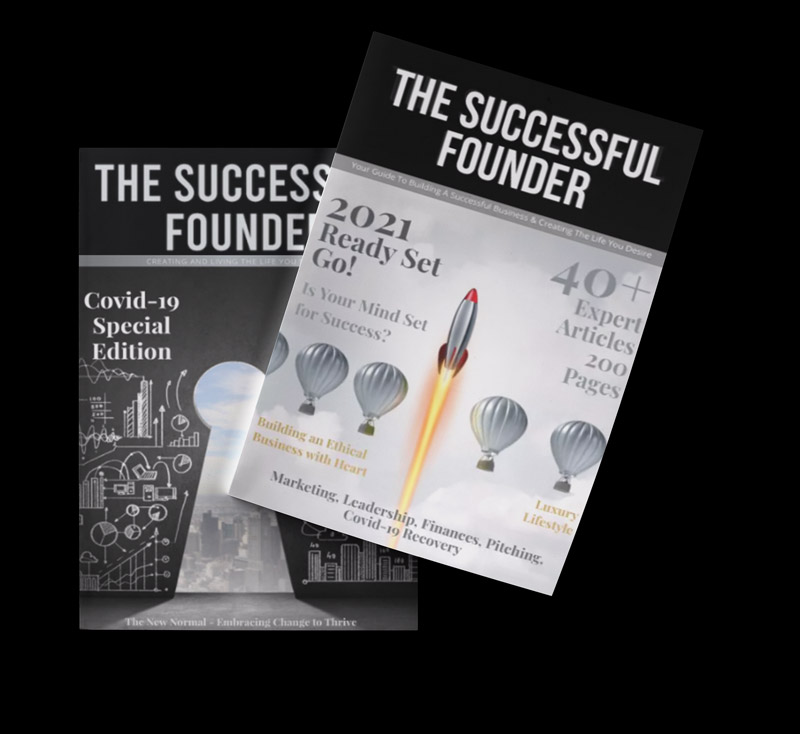
The Successful Founder Magazine is the go to feature-rich magazine for founders on all stages of their entrepreneurship journey .