



Leadership is undergoing one of the most dramatic evolutions in decades. What defined a “strong leader” in 2010 no longer resonates in 2026. The old archetypes — the commanding CEO, the polished executive, the stoic decision-maker — feel strangely outdated in a world shaped by complexity, instability and constant technological acceleration. Today’s leadership landscape demands something different: emotional intelligence, adaptability, intellectual humility, cultural fluency and a deep understanding of human motivation.
For years, companies paid lip service to progressive leadership while still rewarding traditional behaviours. But the past several years of disruption — from global uncertainty to economic turbulence, remote working, AI integration, shifting consumer expectations and social fragmentation — have forced leaders to evolve in real time. The organisations thriving in 2026 have leaders who think with clarity, communicate with honesty and act with agility.
Leadership has stopped being about status. It has become about energetics — the way a leader influences the emotional environment around them, in person or across digital space.
The End of Hero Leadership
One of the most important cultural shifts of the decade is the decline of hero leadership. The charismatic, omniscient leader who “has all the answers” is not only unrealistic — it is deeply incompatible with the pace of modern business. Markets change too fast. Technology evolves too quickly. Teams expect too much transparency. The myth of the all-knowing leader is now seen as a liability rather than an aspiration.
In its place, a new archetype has emerged: the leader who facilitates rather than dictates, who listens before speaking, who tests assumptions instead of clinging to them, and who is comfortable saying, “I don’t know, but I can find out.”
Harvard Business Review’s leadership studies highlight how psychological safety and intellectual humility have become outperforming traits across industries:
https://hbr.org/topic/leadership.
Teams no longer expect their leaders to be heroic. They expect them to be human — and highly competent at navigating uncertainty.
AI Has Redefined What Leadership Looks Like
Artificial intelligence has not replaced leaders, but it has stripped away many of the behaviours that once masqueraded as leadership: information hoarding, authoritative decision-making, rigid hierarchy and instinct-over-data thinking. In 2026, data is available to everyone. Insight is democratised. Information flows freely. AI identifies patterns faster and more accurately than human intuition ever could.
So the modern leader no longer earns respect through superior knowledge. They earn it through superior judgement — the ability to interpret data, combine it with context, and make decisions that balance logic, ethics and long-term vision.
Leaders who use AI transparently and intelligently have gained enormous trust. Google’s Responsible AI guidance underscores how decisional clarity and transparency have become essential leadership traits in the AI age:
https://ai.google/responsibility.
The leaders thriving today are those who use AI as an amplifier of wisdom, not a replacement for it.
The New Emotional Contract Between Leaders and Teams
People no longer work for companies — they work for leaders. And the emotional tone set by leadership has become one of the strongest predictors of retention. Employees want leaders who make them feel safe, seen and supported without being micromanaged. They want leaders who communicate clearly, give context rather than commands, and act with consistency.
The emotional contract between leaders and teams has shifted from authority to partnership. Leadership has become relational, not positional.
This shift is largely driven by generational expectations. Millennials and Gen Z do not respond to hierarchy for hierarchy’s sake. They expect leaders to demonstrate emotional intelligence, empathy, fairness, authenticity and cultural awareness. Leaders who dismiss these qualities as “soft skills” underestimate how profoundly they shape performance, innovation and workplace wellbeing.
LinkedIn’s 2025 Workplace Learning Report highlights how demand for leadership grounded in emotional intelligence has become universal:
https://learning.linkedin.com/resources/workplace-learning-report.
Decision-Making Has Become a Shared Process
In the traditional model, leaders made decisions behind closed doors and delivered them as final instructions. In 2026, great leaders bring their teams into the reasoning process. They explain the strategic logic, risks, trade-offs and alternatives considered. They build trust through transparency, not secrecy.
This shift is not about democracy. It is about trust-building. When people understand how decisions are made, they are far more likely to support them — even when the outcome is challenging.
The leaders who struggle today are those who cling to outdated notions of authority. The leaders who excel are those who treat their teams like intellectual partners, not subordinates.
Leadership Is Now an Energy Game
Something fascinating has emerged in the post-pandemic, AI-accelerated era: leadership is increasingly measured as an energetic force. Teams work better under leaders who regulate their emotional state, communicate calmly, remain composed in crisis and model grounded behaviour.
A leader’s emotional dysregulation spreads through a company like static. Stress becomes contagious. Anxiety becomes cultural. By contrast, a leader with emotional steadiness creates psychological safety — one of the strongest predictors of innovation and performance.
This idea may sound intangible, but it is backed by research from MIT’s Human Dynamics Lab, which has studied how energy, engagement and exploration patterns within teams drive performance more than any other variable:
https://mitsloan.mit.edu.
Leadership is no longer about projecting strength. It is about projecting stability.
Modern Leaders Are Storytellers, Not Just Strategists
In a world where information is overwhelming, stories cut through the noise. The modern leader must be able to articulate not just what the organisation is doing, but why it matters and where it is going.
This narrative ability is not about charisma. It is about coherence. A strong narrative helps teams understand direction, customers understand positioning and investors understand long-term value.
Apple, Patagonia and Airbnb are prime examples of companies that have built their culture and brand power around storytelling. But even smaller businesses benefit when leaders communicate with clarity and emotional resonance.
A compelling narrative gives meaning. Meaning gives motivation. And motivation fuels performance.
Integrity Has Become a Competitive Advantage
The modern business environment is saturated with choice, complexity and constant scrutiny. Trust has become fragile — and incredibly valuable. Leaders who operate with integrity, transparency and consistency stand out immediately.
Consumers pay attention. Teams pay attention. Stakeholders pay attention. And AI makes it harder than ever for leaders to hide flaws or inconsistencies.
Ethical leadership is not idealism. It is strategy. It is the only sustainable way to lead in a world where decisions are visible, searchable and permanent.
The Quiet Power of the Self-Aware Leader
The leaders shaping 2026 are those who have done the internal work: understanding their triggers, strengthening their emotional capacity, embracing ongoing learning, confronting their blind spots and cultivating genuine self-awareness.
Self-awareness is increasingly seen as the foundation of effective leadership, not a bonus quality. McKinsey’s research into modern leadership dynamics underscores that leaders who lack self-awareness create chaos, confusion and mistrust — while self-aware leaders build loyalty and stability:
https://www.mckinsey.com/capabilities/people-and-organizational-performance.
Self-awareness allows leaders to evolve as quickly as the world demands.
Final Thought
Leadership in 2026 is defined not by dominance but by depth. Not by charisma but by clarity. Not by authority but by emotional intelligence. The leaders who will succeed in the years ahead are those who are adaptable enough to evolve, grounded enough to inspire, transparent enough to be trusted and human enough to connect.
The old rules are fading. A new era of leadership — intentional, emotionally intelligent, technologically fluent and deeply humane — has already begun.

TSF Reporters
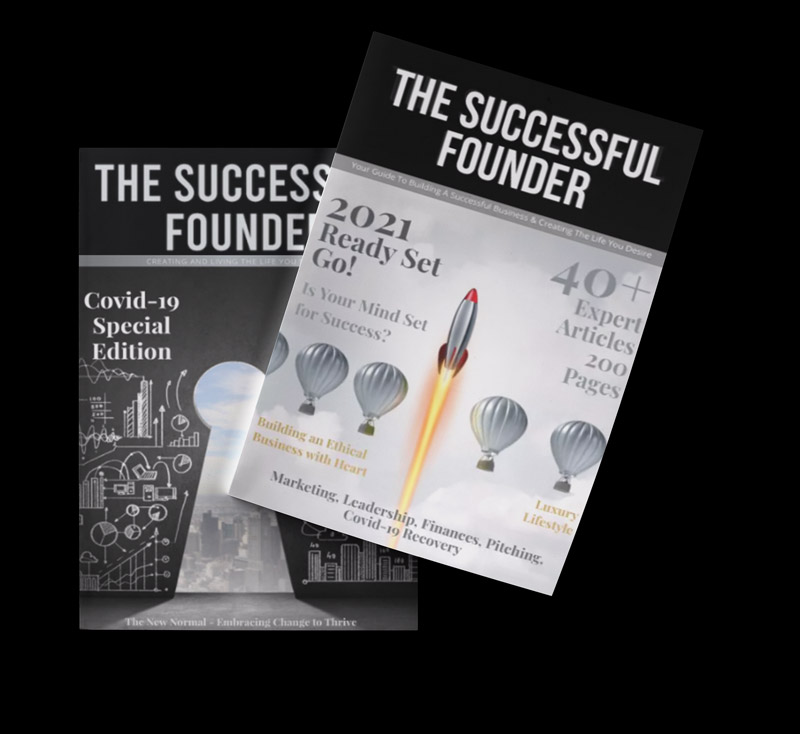
The Successful Founder Magazine is the go to feature-rich magazine for founders on all stages of their entrepreneurship journey .