


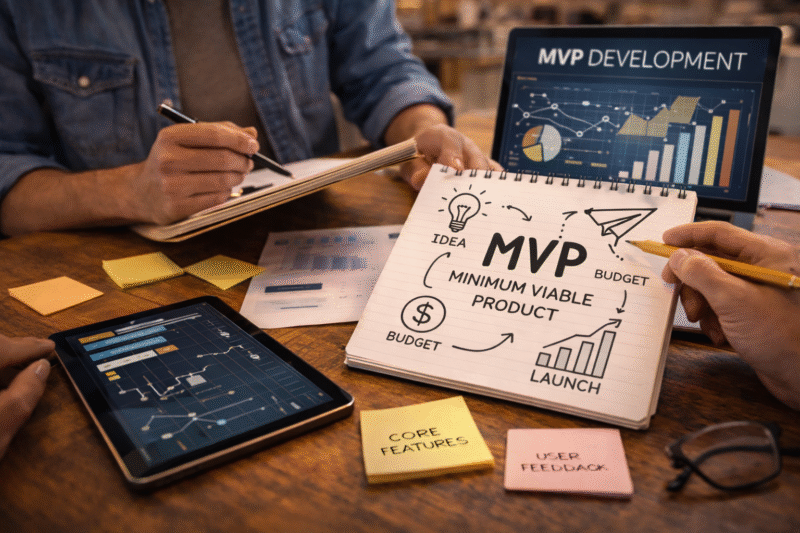
A few years ago, the word “side hustle” conjured images of late-night Etsy shops, casual freelancing, weekend markets and a handful of extra income at the end of the month. But the landscape has transformed so dramatically that in 2026, the term almost feels outdated. Side hustles aren’t small anymore. They aren’t hobbies. They aren’t casual. They’ve evolved into fully formed micro-businesses capable of generating serious revenue — £5k, £10k, even £20k per month — often with only one or two people behind them.
Across the UK, Europe, Asia and the US, millions of people are building financially meaningful ventures outside traditional work structures. Some started to hedge against rising living costs. Others sought greater freedom, flexibility or creative expression. And many, caught between layoffs, AI restructuring and economic uncertainty, began growing income streams simply to protect their future.
What’s unfolding now is something bigger than the gig economy. It is a shift in economic identity. The modern professional doesn’t just want a job. They want autonomy. They want multiple income streams. They want psychological security through diversification. And, increasingly, they want to design their own version of entrepreneurship without the pressure of building a giant company.
Welcome to the age of the micro-business — lean, scalable and surprisingly lucrative.
AI Has Become the Great Equaliser
The single most important force behind the rise of high-earning micro-businesses in 2026 is artificial intelligence. AI has rewritten what one person can achieve in a day. It has collapsed timelines, lowered barriers to entry and made complex operations accessible to solo entrepreneurs.
Tools such as OpenAI’s ChatGPT Enterprise (https://openai.com/enterprise), Claude from Anthropic (https://www.anthropic.com) and Google Gemini (https://ai.google) have allowed individuals to run operations that once required full teams — marketing, admin, planning, copywriting, customer support, product design and even early code development.
One person can now operate with the efficiency, insight and creative power of five. And this has democratised entrepreneurship on a scale never seen before.
Micro-businesses have gone from being passion projects to being powerful, automated machines that run with elegance and speed. The creator economy, the consulting boom, independent digital publishing, niche product ecosystems and AI-led service models have made it possible for ordinary professionals to hit income levels once reserved for small agencies.
The New Breed of Micro-Entrepreneurs
People building £10k/month side businesses are not, as stereotypes might suggest, all tech-savvy whiz kids or high-risk hustlers. They are teachers creating digital curriculum bundles. They are designers selling templates on Gumroad (https://www.gumroad.com) or Etsy (https://www.etsy.com). They are fitness coaches delivering personalised programmes via TrueCoach (https://truecoach.co). They are travel writers monetising affiliate partnerships through Stay22 (https://www.stay22.com) and Travelpayouts (https://www.travelpayouts.com).
They are beauty founders creating micro-brands through Shopify (https://www.shopify.com), print-on-demand creators designing homeware, small-batch skincare makers, micro-influencers generating income through partnerships, TikTok educators selling courses, and AI-powered consultants helping companies navigate automation.
The diversity is striking. The one constant is that micro-entrepreneurs today are building with strategy, not guesswork. They treat their side hustle like a business. They use data to refine their offer. They rapidly test new product lines. They show up consistently on social media. And they scale with precision rather than chaos.
Demand for Independent Expertise Has Exploded
Something else has happened: the world has begun to trust independent experts as much as, if not more than, institutional brands. This shift is documented extensively in Edelman’s Trust Barometer reports:
https://www.edelman.com/trust.
Customers gravitate toward individuals who show their face, share their story and deliver genuine value. In a landscape flooded with corporate noise, authenticity has become commercially magnetic.
This is why solo coaches, consultants, niche educators and creator-led businesses have grown so rapidly. People want specialists, not generalists. They want personalised insight, not one-size-fits-all frameworks. They want a human voice they can trust.
Micro-entrepreneurs excel here because they can be human in a way corporations can’t.
Platforms Have Turned Small Voices Into Big Businesses
A decade ago, distribution was the hardest part of building a business. Today, social platforms are distribution.
TikTok (https://www.tiktok.com), Instagram Reels (https://www.instagram.com), and YouTube Shorts (https://www.youtube.com) have become the biggest growth engines for micro-business creators. Meanwhile, LinkedIn (https://www.linkedin.com) has emerged as a surprising powerhouse for educators, consultants and B2B service providers, with posts from solo entrepreneurs regularly reaching millions of people.
Substack (https://substack.com), meanwhile, has given writers, analysts and niche experts the ability to monetise newsletters with startling success. Patreon (https://www.patreon.com) has turned community-driven creators into six-figure earners. Kajabi (https://www.kajabi.com) has empowered course creators to build education platforms that rival boutique training companies.
The gatekeepers are gone. Distribution is democratised. And reach is no longer limited by your starting point.
The Anti-Burnout Entrepreneur
Another defining characteristic of the 2026 micro-business movement is a rejection of burnout culture. Unlike founders in traditional startup ecosystems, micro-entrepreneurs are not trying to build unicorns. They’re trying to build lives.
They want flexibility, not frenzy.
They want autonomy, not surveillance.
They want meaningful output, not performative productivity.
This has led to a wave of “slow growth entrepreneurship” — profitable, sustainable, deeply human businesses that allow individuals to thrive without overwork.
This shift aligns strongly with the work-life trends emerging across major global workforce studies, including Deloitte’s 2025 Human Capital Report:
https://www2.deloitte.com/global/en/pages/human-capital.html.
Micro-business owners are designing lives that support wellbeing rather than deplete it — and their revenue is rising precisely because they are working smarter, not harder.
The New Micro-Business Models Thriving in 2026
While every micro-business is unique, several models are proving particularly successful this year:
Digital product ecosystems — templates, guides, toolkits, presets, research bundles, curriculum packs. Tools like Gumroad and Payhip (https://www.payhip.com) make this seamless.
Hybrid coaching and AI-assisted consulting — where human insight meets automated systems for delivery and client support.
Niche subscription memberships — small communities built around unique expertise, often hosted on Circle (https://www.circle.so) or Mighty Networks (https://www.mightynetworks.com).
Affiliate-first media micro-brands — blogs, travel guides, buyer’s guides and niche content sites earning through affiliate partnerships and SEO.
Product creators using print-on-demand — allowing founders to run lifestyle brands without inventory or risk.
These are not theoretical models. They have produced some of the fastest-growing micro-businesses of the past two years.
AI Has Made Scaling Easier, Faster and Less Risky
Scaling used to require capital, talent, infrastructure and risk tolerance. In 2026, AI has absorbed most of that overhead. Micro-entrepreneurs now scale through:
AI content engines
AI customer-service bots
AI-driven SEO optimisation
AI-assisted design and branding
AI-automated email sequences and funnels
Platforms like Jasper AI (https://www.jasper.ai) and Notion AI (https://www.notion.so/product/ai) have democratised an entire skillset that once required agencies.
The ability to scale with almost no additional cost is unprecedented.
Micro-Businesses Are Becoming the New Middle Class
The rise of micro-entrepreneurship is not simply a business trend. It is a social shift. Across borders, individuals are rebuilding their economic identity by owning multiple income streams. For many, it is a form of economic resilience. For others, it is a path to independence, creative freedom and meaning.
But for millions, micro-businesses have become the new economic stabiliser — a modern reinvention of what the middle class looks like.
With AI, social distribution, global audiences and low-cost infrastructure, more people than ever are capable of earning meaningfully without traditional employment structures.
This is not a bubble. It is a rebalancing.
Final Thought
The side hustle revolution was never about having a little extra spending money. It was about autonomy, creativity, protection and possibility. In 2026, micro-businesses have become powerful, profitable and surprisingly sophisticated engines of personal freedom.
The next generation of entrepreneurs won’t necessarily launch startups. Many will build beautifully crafted, deeply focused micro-businesses that generate life-changing income without sacrificing wellbeing or identity.
And the individuals who recognise this opportunity early — and build with intention, intelligence and consistency — will shape an entirely new era of entrepreneurship.
TSF Reporters
The Successful Founder Magazine is the go to feature-rich magazine for founders on all stages of their entrepreneurship journey .