


From side hustles to global brands, women are reshaping entrepreneurship — and redefining what success looks like
For decades, entrepreneurship has been framed through a largely male lens — venture capital, high-growth startups, and aggressive scaling strategies.
Yet quietly, and now increasingly visibly, a different model has been emerging.
Across industries, countries, and sectors, women are not only starting businesses at unprecedented rates — they are building resilient, profitable, purpose-driven companies that are redefining the future of business.
This is not simply a trend. It is the rise of the female founder economy — a powerful shift in how businesses are created, scaled, and sustained.
A Rapidly Growing Economic Force
Women are launching businesses at a faster rate than ever before.
According to research from Global Entrepreneurship Monitor (GEM):
https://www.gemconsortium.org/
female entrepreneurship has increased significantly over the past decade, with millions of women globally entering business ownership.
In the UK, data from organisations such as NatWest Group’s Rose Review highlights that increasing female participation in entrepreneurship could add billions to the UK economy:
https://www.natwestgroup.com/what-we-do/the-rose-review.html
The report estimates that up to £250 billion of new value could be added if women started and scaled businesses at the same rate as men.
This is not just about equality — it is about economic transformation.
Why More Women Are Starting Businesses
Several structural and cultural shifts have enabled more women to enter entrepreneurship.
1. Flexibility and Autonomy
Traditional career paths often fail to accommodate the realities of modern life — particularly for women balancing multiple roles.
Entrepreneurship offers:
- Control over working hours
- Location independence
- Greater alignment with personal priorities
2. Digital Accessibility
The rise of digital platforms has removed many traditional barriers.
With tools such as:
- Shopify – https://www.shopify.com/uk
- Etsy – https://www.etsy.com/uk/
- Instagram – https://www.instagram.com/
women can now launch and grow businesses without:
- Large capital investment
- Physical retail space
- Extensive infrastructure
3. Community and Visibility
There has been a significant increase in:
- Female founder networks
- Mentorship programmes
- Online communities
Platforms such as AllBright (https://www.allbrightcollective.com/) and Female Founder Collective (https://femalefoundercollective.com/) are providing visibility, support, and resources for women in business.
A Different Approach to Building Businesses
What makes the female founder economy particularly interesting is not just its growth — but its distinct approach.
Many women-led businesses prioritise:
- Sustainable growth over rapid scaling
- Profitability over external funding
- Purpose alongside profit
- Customer relationships over transactional models
This does not mean these businesses are smaller or less ambitious. On the contrary, they are often more resilient and adaptable.
Research from Boston Consulting Group (BCG) has shown that women-led startups can deliver higher revenue per dollar invested than male-led counterparts:
https://www.bcg.com/publications/2018/why-women-owned-startups-are-better-bet
This challenges long-standing assumptions about what successful entrepreneurship looks like.
The Funding Gap — and How Women Are Overcoming It
Despite their growing impact, female founders continue to face significant challenges — particularly in accessing funding.
According to data from PitchBook:
https://pitchbook.com/news/articles/female-founders-venture-capital
only a small percentage of venture capital funding goes to women-led businesses.
However, this has led to the rise of alternative approaches:
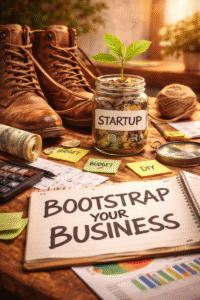
1. Bootstrapping
Many female founders build profitable businesses without external funding, maintaining control and reducing risk.
2. Alternative Funding Models
Including:
- Crowdfunding platforms such as Crowdcube – https://www.crowdcube.com/
- Angel networks focused on women founders
- Grants and government-backed initiatives
3. Revenue-First Strategies
Instead of prioritising rapid scaling, many women focus on:
- Early profitability
- Strong cash flow
- Sustainable growth
This approach often results in businesses that are financially healthier and more stable long-term.
Industries Where Women Are Leading
While women are building businesses across all sectors, several industries are seeing particularly strong growth.
1. Wellness and Beauty
Female founders are transforming the wellness and beauty space with brands that emphasise:
- Transparency
- Sustainability
- Holistic wellbeing
2. E-commerce and Lifestyle Brands
From fashion to homeware, women are building highly successful direct-to-consumer brands.
3. Digital Education and Coaching
Many women are monetising expertise through:
- Online courses
- Membership platforms
- Coaching programmes
Platforms such as Kajabi (https://kajabi.com/) and Teachable (https://teachable.com/) have enabled scalable knowledge-based businesses.
4. Community-Led Businesses
Women are particularly strong in building engaged, loyal communities, which translate into long-term customer relationships.
The Power of Personal Branding
One of the most defining characteristics of the female founder economy is the strength of personal branding.
Many successful women founders are highly visible within their businesses, using platforms such as:
- LinkedIn – https://www.linkedin.com/
- Instagram – https://www.instagram.com/
to:
- Share their journey
- Build trust with audiences
- Attract customers organically
This approach creates a powerful connection between:
- Founder
- Brand
- Audience
It also reduces reliance on traditional advertising, making growth more accessible and cost-effective.
Challenges Still Facing Female Founders
While progress is significant, challenges remain.
1. Access to Funding
The venture capital gap continues to limit opportunities for some founders.
2. Confidence and Visibility
Many women report hesitancy around:
- Self-promotion
- Public visibility
- Taking leadership positions
3. Balancing Multiple Responsibilities
Women are still more likely to carry disproportionate responsibilities outside of work, which can impact business growth.
4. Underrepresentation in Certain Industries
Sectors such as technology and finance still see lower representation of women founders.
However, these challenges are increasingly being addressed through:
- Policy changes
- Support networks
- Cultural shifts
Why Women Are Building the Future of Business
The rise of the female founder economy is not just about numbers — it is about innovation in how businesses are built.
Women are leading the way in:
- Human-centred business models
- Authentic brand storytelling
- Community-driven growth
- Sustainable and ethical practices
These approaches align closely with the expectations of modern consumers, who increasingly value:
- Transparency
- Purpose
- Trust
As a result, women-led businesses are often better positioned to succeed in today’s market.
What This Means for Aspiring Female Founders
For women considering starting a business, the landscape has never been more supportive.
Key takeaways include:
1. You Do Not Need to Follow Traditional Models
There is no single path to success. Many of today’s most successful businesses are built outside of traditional frameworks.
2. Start Small and Build Gradually
Many successful founders began as side hustles before scaling.
3. Leverage Digital Tools
Use platforms and technology to reduce costs and increase reach.
4. Build a Strong Network
Surround yourself with:
- Mentors
- Peers
- Supportive communities
5. Own Your Voice and Story
Your perspective is an asset — not a limitation.
In Summary
The rise of the female founder economy represents one of the most significant shifts in modern entrepreneurship.
Women are not just participating in business — they are:
- Redefining how businesses operate
- Challenging outdated models
- Building companies that prioritise both profit and purpose
With increasing access to tools, communities, and opportunities, the momentum behind female entrepreneurship is only set to grow.
The future of business will not be defined by a single model, industry, or demographic.
But one thing is clear:
Women will play a central role in shaping it.